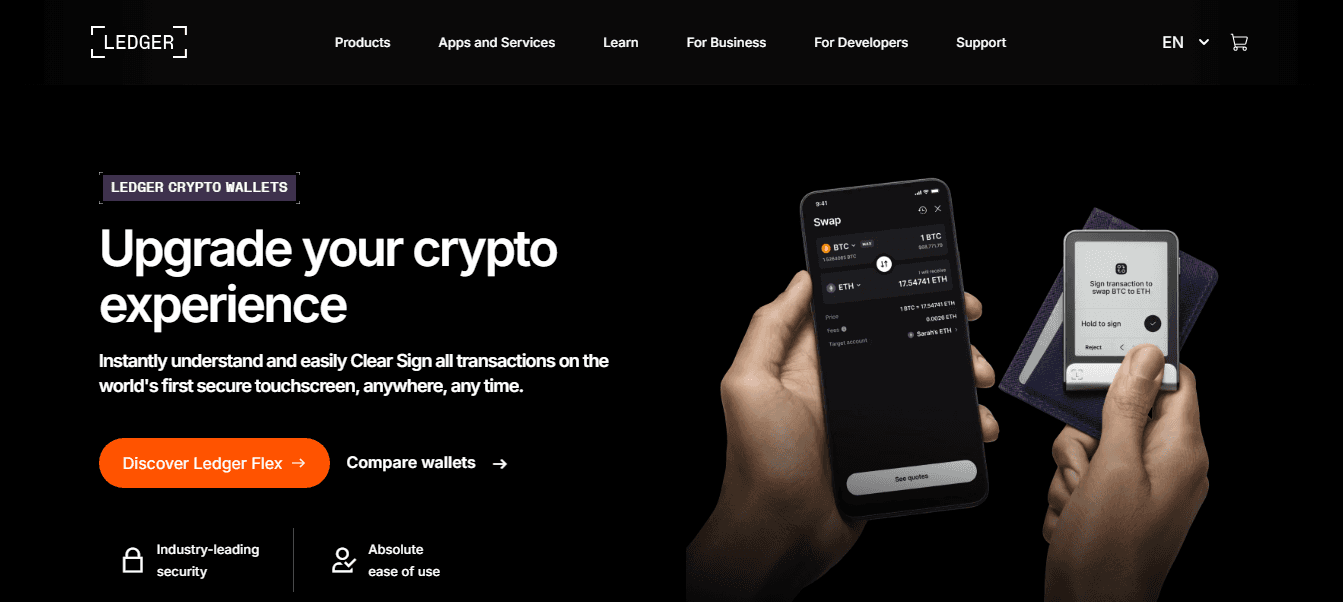
Ledger Login: Secure Authentication for the Modern Crypto Era
Introduction
Digital assets have redefined how value is created, stored, and transferred. Cryptocurrencies, non-fungible tokens (NFTs), and decentralized applications (dApps) now form a parallel financial ecosystem that operates without traditional intermediaries. While this innovation brings freedom and transparency, it also introduces a serious responsibility: users must secure their own assets.
In traditional systems, banks reset passwords and recover accounts. In blockchain systems, there are no such safety nets. This reality makes secure authentication essential. Ledger Login addresses this challenge by offering a hardware-based login system that protects private keys and enforces user-controlled access.
This article provides entirely new and original content on Ledger Login, exploring its concept, architecture, real-world applications, security benefits, setup process, and future relevance. The goal is to offer a clear, in-depth understanding for anyone seeking a safer way to access and manage crypto assets.
What Does Ledger Login Mean?
Ledger Login is a secure authentication mechanism that uses a Ledger hardware wallet to verify identity and authorize access to cryptocurrency accounts and blockchain services. Instead of entering credentials into a website or app, users confirm actions directly on a physical device.
This process ensures that private keys—the most critical element of crypto ownership—are never exposed to the internet, software wallets, or third-party platforms. Ledger Login transforms authentication from a digital risk into a physical verification step.
The Problem with Traditional Crypto Logins
Many crypto users still rely on software wallets, browser extensions, or centralized exchanges. While convenient, these methods introduce multiple risks.
Common vulnerabilities include:
Phishing websites stealing login credentials
Malware accessing stored private keys
Browser extensions being compromised
Exchange breaches leading to mass fund losses
Ledger Login was created to eliminate these weaknesses by removing sensitive data from online environments entirely.
How Ledger Login Solves Security Challenges
Ledger Login replaces fragile digital authentication with a system built around hardware trust and cryptographic certainty.
No Password Dependency
Ledger Login does not rely on usernames, emails, or passwords that can be leaked or guessed.
Offline Key Isolation
Private keys are generated and stored inside the Ledger device and never leave it.
User Presence Requirement
Every login or transaction requires the physical presence of the device and user confirmation.
This design significantly reduces attack surfaces compared to online login systems.
Technical Architecture of Ledger Login
Ledger Login is built on a carefully engineered security model.
Secure Element Chip
Ledger devices use a certified Secure Element (SE) chip, similar to those used in banking cards and government IDs. This chip is designed to resist physical and digital tampering.
Trusted Display and Buttons
Transaction and login details are shown on the device’s own screen, preventing manipulation by compromised computers.
Cryptographic Operations
All signing operations occur within the Secure Element, ensuring private keys are never exposed.
This architecture creates a trusted boundary between the user and the blockchain.
Ledger Login and User Ownership
A key principle of blockchain technology is self-custody. Ledger Login reinforces this principle by ensuring users retain complete ownership of their assets.
With Ledger Login:
Funds are not held by third parties
Access cannot be frozen or restricted externally
Users control when and how transactions are approved
This level of ownership is particularly valuable in uncertain regulatory or economic environments.
Ledger Login with Ledger Live
Ledger Live is the official application that enables Ledger Login for everyday crypto management. It acts as a visual interface while delegating all sensitive actions to the hardware wallet.
Using Ledger Login through Ledger Live, users can:
Access accounts securely
View balances and transaction history
Send and receive digital assets
Stake supported cryptocurrencies
Install and manage blockchain apps
Ledger Live never stores private keys, making Ledger Login the foundation of its security.
Multi-Blockchain and Token Support
Ledger Login supports thousands of cryptocurrencies and tokens across numerous blockchains.
These include:
Bitcoin and Bitcoin-based assets
Ethereum and ERC-20 tokens
Layer-2 networks
Alternative blockchains such as Solana and Polkadot
This broad compatibility allows Ledger Login to function as a universal access layer for diverse crypto ecosystems.
Ledger Login for Web3 Applications
Web3 applications require users to sign messages and approve smart contract interactions. Ledger Login provides a secure way to participate in these activities.
When connected to compatible wallets, Ledger Login enables:
Secure dApp authentication
Transparent smart contract approvals
Protection from malicious contract calls
By requiring on-device confirmation, Ledger Login helps users avoid costly mistakes.
NFT Management with Ledger Login
NFT ownership depends entirely on private key security. Ledger Login ensures NFTs remain protected regardless of platform risks.
Benefits include:
Secure NFT minting and transfers
Safe interaction with marketplaces
Protection from fake approval scams
Ledger Login allows collectors to manage digital art and collectibles with confidence.
Initial Setup Process for Ledger Login
Setting up Ledger Login is designed to balance security with usability.
Device Initialization
Users create a new wallet or restore an existing one when powering on the device.
PIN Code Configuration
A PIN code protects the device from unauthorized physical access.
Recovery Phrase Generation
A recovery phrase is generated and must be recorded offline. This phrase is the ultimate backup.
Software Pairing
Ledger Live is installed to enable Ledger Login functionality.
Once completed, the user is fully secured.
Daily Use of Ledger Login
In everyday use, Ledger Login remains simple and intuitive.
Typical actions include:
Unlocking the device
Reviewing action details on the screen
Approving or rejecting requests
This process ensures users stay informed and in control.
Ledger Login vs Cloud-Based Wallets
Cloud-based wallets prioritize convenience but introduce systemic risks.
Ledger Login offers:
Offline key storage
No centralized attack points
Reduced dependency on internet security
For long-term holders, Ledger Login provides superior protection.
Risk Reduction Through Ledger Login
Ledger Login significantly lowers the likelihood of:
Phishing-related fund loss
Unauthorized wallet access
Accidental transaction approvals
While no system is risk-free, Ledger Login minimizes common failure points.
Troubleshooting Ledger Login Issues
Device Connection Errors
Updating software and checking cables usually resolves detection problems.
Forgotten PIN
The wallet can be restored using the recovery phrase.
Application Sync Problems
Ensuring firmware and apps are up to date improves compatibility.
Best Practices for Long-Term Security
To maintain Ledger Login security:
Store recovery phrases offline
Avoid unofficial software
Verify details before approval
Keep firmware current
These practices strengthen overall protection.
Advantages of Ledger Login
Ledger Login provides:
Strong hardware-based security
Full self-custody
Broad ecosystem compatibility
User-controlled authentication
These advantages make it suitable for both beginners and advanced users.
Limitations to Consider
Despite its strengths, Ledger Login has limitations:
Requires device access
Slower than one-click logins
Learning curve for new users
Security-focused users often view these as acceptable trade-offs.
The Long-Term Role of Ledger Login
As digital assets become more valuable, secure authentication will grow in importance. Ledger Login is well-positioned to remain a cornerstone of crypto security due to its hardware-first approach and adaptability to emerging technologies.
Conclusion
Ledger Login represents a powerful shift away from vulnerable online authentication toward secure, user-controlled access. By combining hardware isolation, cryptographic signing, and physical confirmation, it offers a robust solution for managing digital assets in a decentralized world.
For anyone seeking long-term security, true ownership, and peace of mind, Ledger Login stands as a trusted gateway to the future of crypto.